

St Asaph Cathedral, Denbighshire
Address
Cathedral Church of St Asaph, 25 High Street, Saint Asaph LL17 0RDTheme
Overview
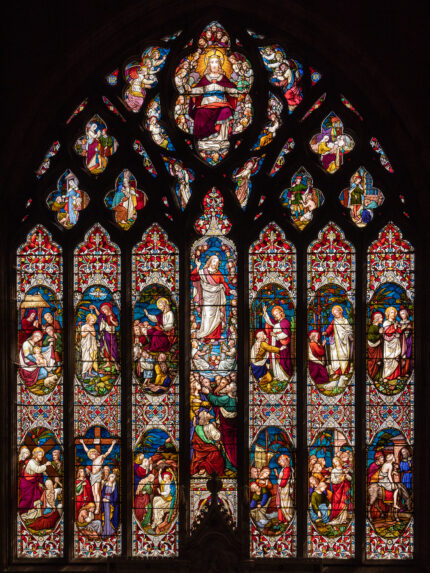
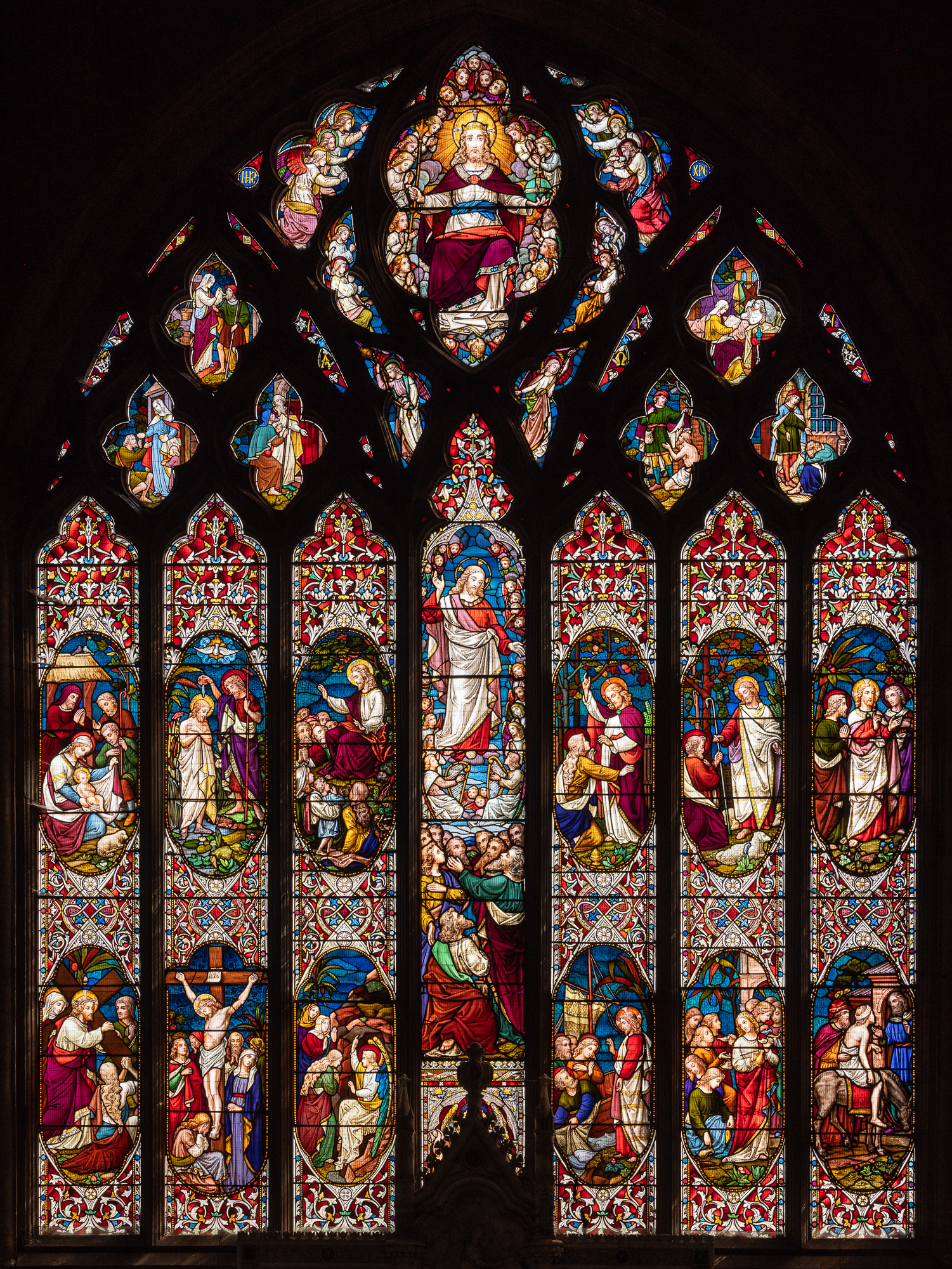
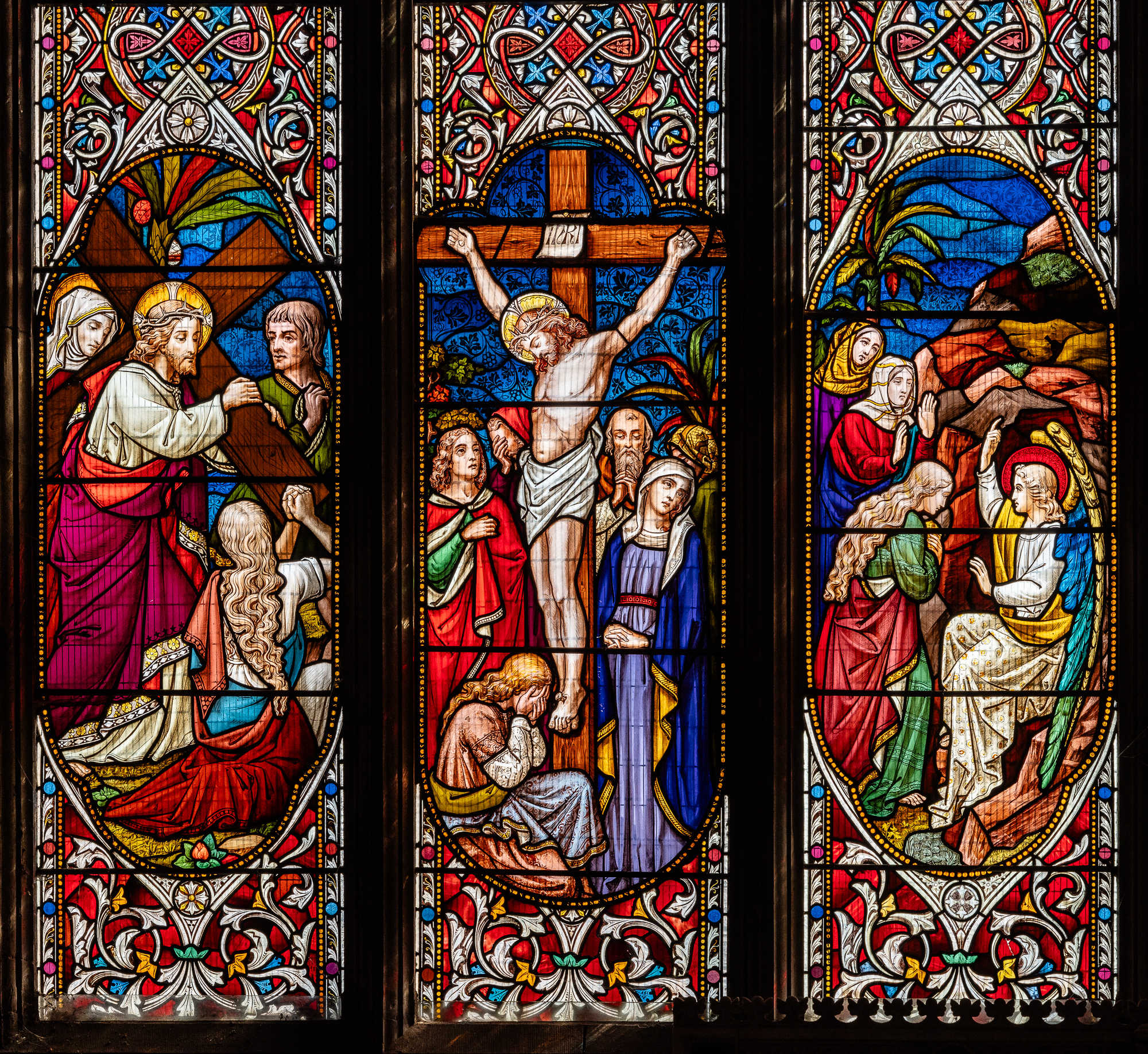
A small medieval cathedral church of a bishopric founded in the twelfth century. A restoration of the chancel in 1800 resulted in the addition of stained glass by Francis Eginton, but this was displaced in 1864, at the time of the restoration by George Gilbert Scott, by the east window highlighted below made by Ward & Hughes. The heraldic panels from Eginton’s window are now found in the south transept, while the pictorial panels were installed elsewhere at Llandegla.
Most of the remaining stained glass windows in the cathedral were made between 1867 and 1891 by Ward & Hughes, including some supplied by its chief designer, Henry Hughes, under his own name, and its successor firm, T.F. Curtis, Ward and Hughes. The latter’s chief designer was George Parlby.
The cathedrals has just two twentieth century windows. The first is in the north aisle of the nave. It depicts the founder of the church Cyndeyrn (Kentigern) and his successor Asaph and was made by James Powell & Sons (1926). The artist was Ernest Penwarden. The second is the west window (1940), which commemorates Alfred George Edward, the first Archbishop of Wales, and is by Christopher Charles Powell. As with the east window, it replaced an earlier window, although here the tracery (1855), by Charles Alexander Gibbs, was retained.
For further information see: Stained Glass in Wales – St Asaph Cathedral
Highlight
East windowArtist, maker and date
Ward & Hughes, 1864Reason for highlighting
The east window by Ward & Hughes is probably the largest work in Wales by a prolific and hugely successful Victorian firm. It stands as the starting point for a succession of windows at the cathedral by the firm into the twentieth century, illustrating the changes in the firm’s style.
Artist/maker notes
Ward & Hughes / Curtis, Ward & Hughes
The original partnership was between Thomas Ward (1808-70) and Henry Hughes (1822-83), who became the chief designer, while also producing windows under his own name. On his death the firm was taken over by a relative Thomas Figgis Curtis (1845-1924). The firm continued for a few years after Curtis’s death, in the hands of a cousin, Mrs Ethel Kibblewhite.
Sources:
A Guide to the Church of Saint Mary the Virgin Swaffham Prior, 3rd Edition, 2016
Victorian Stained Glass by Martin Harrison (Barrie & Jenkins Ltd, 1980)
Comments by
Martin Crampin